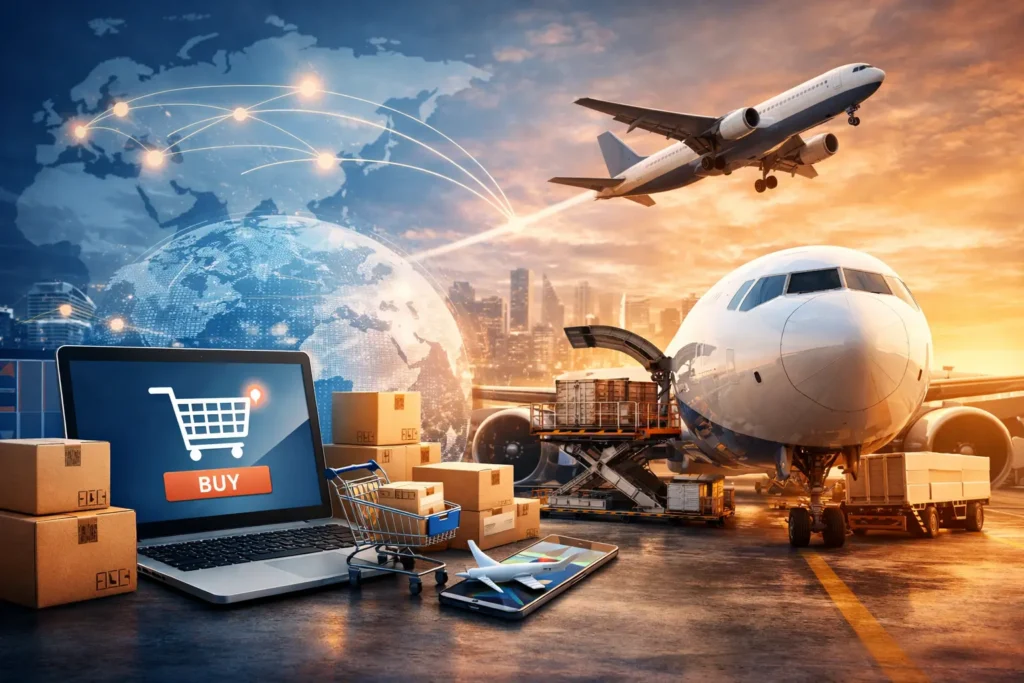
The e-commerce industry has been experiencing explosive growth in recent years. With consumers increasingly preferring to shop online, businesses are relying heavily on logistics to deliver goods quickly and efficiently. Among the different modes of transportation, air freight has become a critical component in meeting the rising demand for speed and reliability. But how exactly does the growth of e-commerce influence air freight? Let’s explore this topic in detail.
The Rise of E-Commerce
E-commerce has grown beyond being a convenience to becoming a primary way for consumers to shop. From electronics and fashion to groceries and pharmaceuticals, almost every product is available online. According to industry reports, global e-commerce sales have been growing at double-digit rates annually, and this trend is expected to continue.
Several factors drive this growth:
Consumer Preference for Convenience – Shoppers increasingly prefer the ease of ordering online from their homes or workplaces.
Global Access – Customers can buy products from international brands without leaving their country.
Mobile Shopping – Smartphones and apps have made online shopping faster and more accessible.
Rapid Delivery Expectations – Services like same-day or next-day delivery have set high standards for shipping.
This boom in online shopping directly impacts logistics, particularly air freight, because businesses need to move products faster than ever before.
Why Air Freight Matters in E-Commerce?
Air freight, or air cargo, involves transporting goods by aircraft. Unlike sea freight, which is slower, air freight offers speed, reliability, and flexibility—qualities essential for e-commerce. Here’s why air freight is crucial:
Speed of Delivery – Online shoppers expect quick delivery, often within 24 to 72 hours. Air freight is the fastest mode of transport for long distances, enabling businesses to meet these expectations.
Global Reach – E-commerce companies often sell internationally. Air freight allows them to ship products across continents quickly.
Inventory Management – Faster shipments reduce the need for large inventory storage. Companies can operate on a “just-in-time” model, saving costs and space.
Perishable and High-Value Goods – Electronics, fashion items, pharmaceuticals, and fresh products require secure and rapid transportation. Air freight ensures these goods reach their destination safely and on time.
Impact of E-Commerce Growth on Air Freight
The growth of e-commerce has created both opportunities and challenges for air freight. Here’s a detailed look at the key impacts:
1. Increased Demand for Air Cargo
With more consumers shopping online, the volume of goods requiring fast delivery has surged. Airlines and logistics providers have had to increase capacity to meet this demand. Cargo flights that once focused on B2B shipments are now heavily influenced by B2C (business-to-consumer) shipments.
2. Pressure on Capacity
The sudden surge in demand for air freight often leads to capacity constraints. During peak seasons such as Black Friday, Cyber Monday, and the holiday period, air cargo space becomes scarce. This can result in higher shipping costs and potential delays if businesses fail to plan ahead.
3. Evolution of Last-Mile Logistics
While air freight handles the long-distance transport, the last mile—the journey from the airport to the customer’s doorstep—becomes critical. E-commerce growth has pushed logistics companies to optimize this process through partnerships, technology, and innovative delivery solutions such as drones or local fulfillment centers.
4. Adoption of Technology
E-commerce has accelerated the adoption of digital tools in air freight. Businesses use tracking systems, real-time analytics, and predictive demand planning to manage shipments efficiently. Automation and AI also help in route optimization and cargo handling.
5. Changes in Shipping Patterns
Traditional bulk shipments are gradually being replaced by smaller, frequent shipments. E-commerce orders are often individual parcels rather than pallets of goods. This shift has forced air freight operators to adjust their handling processes to accommodate smaller, more diverse shipments.
6. Environmental Considerations
The growth of air freight comes with increased carbon emissions. E-commerce companies and logistics providers are under pressure to adopt sustainable practices, such as using fuel-efficient aircraft, carbon offset programs, and optimizing flight routes to minimize environmental impact.
7. Competitive Pricing and Service Expectations
Consumers now compare not only product prices but also shipping costs and delivery times. To remain competitive, businesses need logistics partners capable of providing affordable, reliable, and fast air freight services.
Benefits of Air Freight for E-Commerce Businesses
For e-commerce companies, leveraging air freight brings several advantages:
Faster Delivery Times – Quick shipping increases customer satisfaction and loyalty.
Global Market Expansion – Air freight allows businesses to tap into international markets efficiently.
Reduced Inventory Costs – With faster replenishment, companies can keep lower inventory levels.
Enhanced Reliability – Air freight is less prone to delays caused by traffic, port congestion, or customs compared to sea or road transport.
Better Handling of High-Value Products – Air cargo offers safer transportation for electronics, luxury goods, and medical supplies.
Challenges of Using Air Freight for E-Commerce
Despite its benefits, air freight has challenges:
Higher Costs – Air freight is more expensive than sea or land transport, which can impact profit margins.
Limited Cargo Space – Aircraft have weight and volume limits, which can restrict large shipments.
Weather Dependence – Flights may be delayed due to adverse weather conditions.
Customs and Regulations – International shipments require careful compliance with customs regulations and documentation.
E-commerce businesses must carefully weigh these factors and plan their logistics strategies accordingly.
Future Trends
The link between e-commerce and air freight will continue to grow. Some key trends to watch include:
Integration of AI and Robotics – Automation in cargo handling and predictive analytics will improve efficiency.
Expansion of Air Freight Networks – More routes and cargo-focused flights are expected to meet rising demand.
Green Logistics Initiatives – Sustainable aviation fuels and electric aircraft may reduce carbon footprints.
Flexible Delivery Solutions – Innovations like same-day international delivery will become more common.
E-Commerce Hubs – Establishing air freight hubs near major e-commerce centers can reduce transit times.
How Businesses Can Leverage Air Freight?
E-commerce companies can maximize the benefits of air freight by:
Partnering with experienced logistics providers who understand global shipping regulations.
Using advanced tracking and analytics to manage inventory and shipment schedules.
Planning for peak season demand to avoid delays and high costs.
Exploring hybrid shipping solutions that combine air, sea, and land transport for cost-effectiveness.
Focusing on sustainability by selecting partners who prioritize green logistics practices.
Conclusion
The growth of e-commerce is transforming air freight, making it an indispensable part of modern supply chains. Fast, reliable, and globally connected, air freight allows e-commerce businesses to meet rising customer expectations and expand internationally. While challenges such as costs, capacity, and environmental concerns exist, technological advancements and strategic planning help businesses harness the full potential of air freight.
For e-commerce companies aiming to thrive in the digital era, investing in efficient air freight solutions is no longer optional—it’s essential.
Are You Looking for Reliable Air Freight Solutions?
For fast, reliable, and global air freight solutions, trust ISLO Logistics to deliver your e-commerce shipments safely and on time. Contact us today to optimize your supply chain!
FAQ’s About E-Commerce Growth and Air Freight
Q1: What is air freight, and why is it important for e-commerce?
A: Air freight is the transportation of goods via aircraft. It is crucial for e-commerce because it allows fast, reliable delivery of products globally, meeting customer expectations for quick shipping.
Q2: How does e-commerce growth affect air freight demand?
A: As online shopping grows, more parcels require fast delivery, increasing the need for air cargo capacity and faster logistics services.
Q3: What types of products benefit most from air freight?
A: High-value electronics, fashion items, perishable goods, and pharmaceuticals benefit most because they require speed, security, and careful handling.
Q4: Are there environmental concerns with air freight?
A: Yes, air freight has a higher carbon footprint compared to sea or land transport. Many logistics companies are adopting fuel-efficient aircraft and sustainable practices to reduce environmental impact.
Q5: Can small e-commerce businesses use air freight?
A: Yes, many logistics providers offer flexible solutions for small shipments, making air freight accessible to businesses of all sizes.