Global trade looks simple on the surface. A product is made in one country and delivered to a customer in another. But behind that smooth delivery is a complex system of planning, storage, transportation, paperwork, and tracking. This is where 3PL services come in.
Third-party logistics, commonly known as 3PL, helps businesses move goods across cities, countries, and continents without managing everything on their own. From warehousing to shipping and customs handling, 3PL companies act as the backbone of modern global logistics.
In this guide, we will explain how 3PL services work in global logistics, step by step, using easy language and real-world examples. Whether you are a growing business, an eCommerce seller, or a company shipping internationally, this article will help you understand why 3PL services matter and how they keep global supply chains running smoothly.
Also Read: 3PL Services: The Complete Guide to Third-Party Logistics
What Are 3PL Services?
3PL services are logistics services provided by an external company that manages part or all of a business’s supply chain operations.
Instead of handling shipping, storage, and delivery on their own, businesses hire a third-party logistics provider to do the work for them.
Think of it like this:
First party: The company that makes or sells the product
Second party: The customer buying the product
Third party (3PL): The logistics expert that moves and stores the product
3PL providers help businesses focus on selling and growing, while logistics professionals handle the heavy work behind the scenes.
Why 3PL Services Are Important in Global Logistics?
Global logistics is much more complex than local shipping. It involves long distances, multiple transport methods, customs rules, different time zones, and strict deadlines.
3PL services help solve these challenges by offering:
International shipping expertise
Access to global warehousing networks
Knowledge of customs and regulations
Faster and more reliable delivery
Lower overall logistics costs
Without 3PL providers, many businesses would struggle to expand beyond their home country.
How 3PL Services Work Step by Step?
To truly understand how 3PL services work in global logistics, let’s walk through the full process from start to finish.
Step 1: Understanding the Client’s Logistics Needs
Everything starts with planning.
A 3PL provider first learns about the business it is supporting. This includes:
What products are being shipped
Where the products are made
Where they need to be delivered
How fast deliveries must be made
Expected order volumes
Special handling needs (fragile, temperature-controlled, oversized goods)
This step helps the 3PL company design a logistics plan that fits the business perfectly.
Step 2: Receiving and Storing Goods in Warehouses
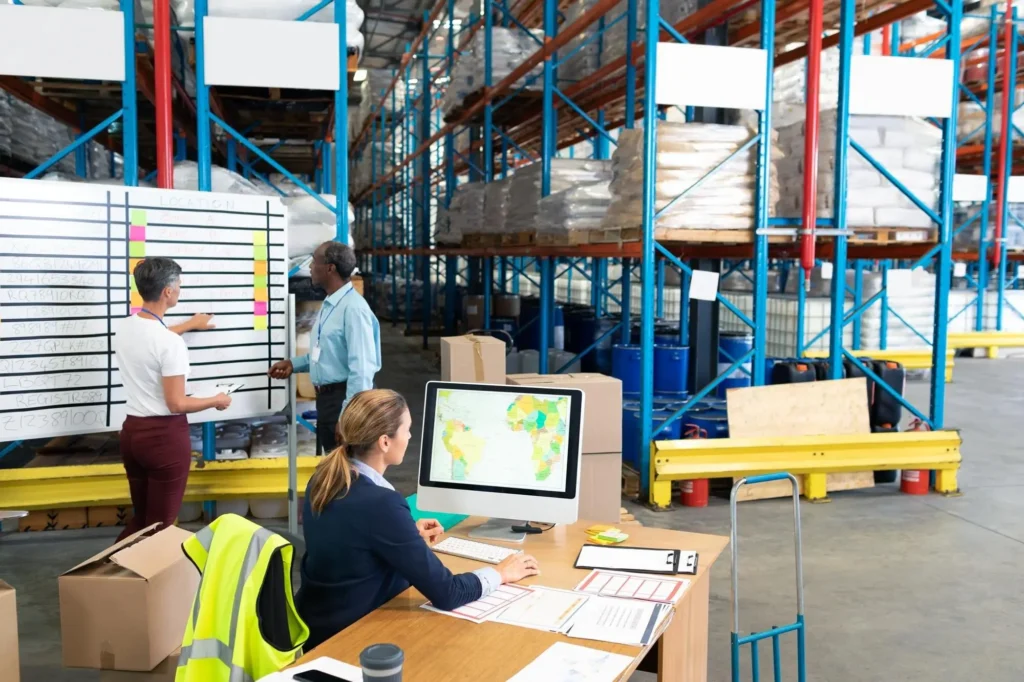
Once products are ready, they are sent to a 3PL warehouse.
What Happens in a 3PL Warehouse?
Goods are received and checked
Products are counted and inspected
Items are labeled and stored safely
Inventory details are recorded digitally
Many 3PL providers operate warehouses in multiple countries. This allows businesses to store goods closer to their customers, reducing delivery time and cost.
Warehouse management is a core part of 3PL services and plays a big role in global logistics efficiency.
Step 3: Inventory Management and Tracking
3PL services companies use advanced inventory systems to track every item in storage.
These systems help businesses:
Know how much stock is available
Avoid overstocking or running out of products
Track inventory in real time
Plan future shipments better
With proper inventory management, businesses can make smarter decisions and avoid unnecessary delays.
Step 4: Order Processing and Picking
When a customer places an order, the 3PL system receives the order automatically.
Then the warehouse team:
Finds the correct products
Picks items from storage
Packs them securely
Prepares them for shipping
This process is called order fulfillment, and it must be fast and accurate—especially in global logistics where delays can cause major problems.
Step 5: Choosing the Best Transportation Method
Shipping goods globally requires careful planning.
3PL providers select the best transportation option based on:
Distance
Cost
Delivery time
Type of goods
Common Transportation Methods Used by 3PL Companies
Air freight for fast and urgent deliveries
Ocean freight for large and cost-effective shipments
Road transport for regional deliveries
Rail freight for stable long-distance routes
Often, global shipments use a combination of these methods, known as multimodal transportation.
Step 6: Handling Customs and Documentation
Customs clearance is one of the most difficult parts of global logistics.
3PL providers manage:
Import and export documents
Customs declarations
Duties and taxes
Compliance with international trade laws
Because 3PL companies work with customs daily, they know how to avoid mistakes that can cause delays or penalties.
This expertise is one of the biggest reasons businesses rely on 3PL services for international shipping.
Step 7: Global Shipping and Real-Time Tracking
Once the shipment is on the move, 3PL providers monitor it closely.
They offer:
Real-time shipment tracking
Status updates
Delay alerts
Route optimization if problems arise
This visibility helps businesses stay informed and keep their customers updated.
Step 8: Last-Mile Delivery
The final step is last-mile delivery, where goods reach the customer’s doorstep.
In global logistics, last-mile delivery can be challenging due to:
Local regulations
Address accuracy
Traffic and infrastructure
Customer availability
3PL providers work with local carriers and delivery partners to ensure smooth and timely delivery.
Step 9: Returns Management (Reverse Logistics)
Global logistics doesn’t end with delivery.
Sometimes products need to be returned. 3PL providers manage:
Product returns
Inspections
Restocking or disposal
Refund coordination
This process is called reverse logistics, and it helps businesses maintain customer satisfaction while controlling costs.
How 3PL Services Support Different Industries?
3PL services are used across many industries, including:
eCommerce and retail
Manufacturing
Healthcare and pharmaceuticals
Automotive
Food and beverage
Electronics
Each industry has unique needs, and experienced 3PL providers adapt their services accordingly.
Benefits of Using 3PL Services in Global Logistics
Using a 3PL provider offers many advantages:
Lower logistics costs
Faster international shipping
Access to global infrastructure
Reduced operational stress
Better customer experience
Easy scalability during peak seasons
For businesses looking to expand globally, 3PL services are often the smartest path forward.
Why Choose ISLO Logistics for 3PL Services?
ISLO Logistics understands that global shipping is not just about moving boxes—it’s about trust, timing, and transparency.
Are You Looking for a Reliable 3PL Provider?
ISLO Logistics simplifies global shipping with smart 3PL solutions designed for speed, accuracy, and growth. Let us handle your logistics while you focus on scaling your business.
FAQ’s About How 3PL Services Work in Global Logistics
What does 3PL stand for in logistics?
3PL stands for Third-Party Logistics. It means outsourcing logistics services like warehousing, shipping, and fulfillment to a specialized company.
How do 3PL services help global businesses?
3PL services manage international shipping, customs, storage, and delivery, making global logistics faster, easier, and more cost-effective.
Is 3PL only for large companies?
No. Small and medium-sized businesses also use 3PL services to grow without investing in their own logistics infrastructure.
What is the difference between 3PL and freight forwarding?
Freight forwarding focuses mainly on transportation, while 3PL services cover warehousing, inventory, fulfillment, and end-to-end logistics management.
Can 3PL providers handle eCommerce fulfillment?
Yes. Many 3PL companies specialize in eCommerce order fulfillment, including picking, packing, shipping, and returns.