
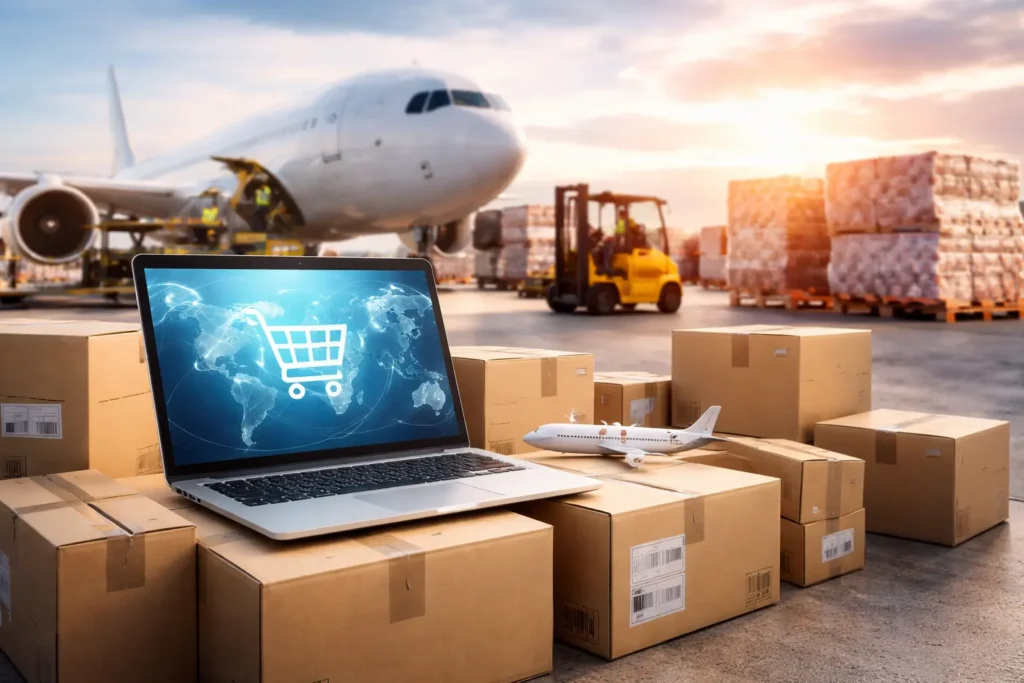
E-commerce has changed the way people shop. Not long ago, buying something meant going to a store, standing in line, and carrying items home yourself. Today, you can sit on your couch, tap a few buttons on your phone, and wait for a package to arrive at your door. This simple change in shopping habits has created a huge ripple effect across the global supply chain. One of the biggest areas feeling this impact is air freight.
As online shopping grows faster every year, businesses are under pressure to deliver products quicker, safer, and more reliably than ever before. Customers now expect same-day or next-day delivery, even when ordering from another country. To meet these expectations, many companies are turning to air freight as their preferred shipping option. In this blog, we will explore how e-commerce growth is directly driving air freight demand and why this trend is likely to continue.
The Rise of E-Commerce and Changing Customer Expectations
E-commerce did not grow overnight. It started slowly, with people ordering books, CDs, and small electronics online. Over time, better internet access, secure payment systems, and smartphones made online shopping easier for everyone. Today, people buy clothes, groceries, medicines, electronics, and even furniture online.
With this growth came a big change in customer expectations. Shoppers no longer want to wait weeks for their orders. Many now expect deliveries in just a few days or even hours. When customers see “fast delivery” or “next-day shipping” on a website, they are more likely to place an order. This pressure falls on sellers and logistics providers to move goods quickly across long distances.
This is where air freight becomes important. Compared to sea or road transport, air freight is much faster. When time matters, flying goods is often the best choice.
Why Speed Matters So Much in Online Shopping?
Speed is one of the biggest reasons air freight demand is growing. In e-commerce, time is money. If a customer has to wait too long, they may cancel the order or choose another seller next time. Fast delivery helps businesses keep customers happy and loyal.
For example, imagine ordering a mobile phone online. If it arrives in two days, you feel satisfied. If it takes three weeks, you may feel frustrated. E-commerce companies know this, so they use air freight to shorten delivery times, especially for international orders.
Air freight allows goods to move from one country to another within hours instead of weeks. This speed is especially useful during peak shopping seasons, such as holidays, sales events, or special promotions. During these times, order volumes increase sharply, and air cargo helps businesses handle the rush.
Cross-Border E-Commerce and Global Air Cargo Growth
One of the strongest drivers of air freight demand is cross-border e-commerce. Today, customers regularly order products from sellers located in other countries. A shopper in Pakistan might order electronics from China, fashion items from Europe, or beauty products from the United States.
Cross-border orders need fast and reliable transportation. Sea freight may be cheaper, but it is slow and not suitable for urgent or high-value goods. Air freight fills this gap by offering quick transit times and better tracking.
As more small and medium businesses start selling internationally through online platforms, the need for air cargo services continues to rise. Even businesses that once relied only on local markets are now reaching customers worldwide, thanks to e-commerce.
The Role of Air Freight in Handling High-Value Products
Many e-commerce products are small in size but high in value. Items like smartphones, laptops, branded clothing, medical supplies, and luxury goods need secure and fast transportation. Air freight is ideal for such shipments.
Because air cargo moves quickly and spends less time in transit, the risk of damage, theft, or loss is lower. This makes it a preferred choice for businesses shipping expensive or fragile items. E-commerce companies want their products to arrive in perfect condition, and air freight helps make that possible.
As online sales of high-value items increase, air freight demand naturally grows alongside them.
Same-Day and Next-Day Delivery: A Game Changer
One of the biggest trends in e-commerce is same-day and next-day delivery. Large online retailers have set high standards by offering very fast shipping options. Once customers experience this level of service, they expect it from other sellers too.
To meet these expectations, logistics networks must move products quickly between warehouses, cities, and countries. Air freight plays a key role in this process, especially for long-distance deliveries.
Even if a package travels by road for part of the journey, air transport is often used for the longest distance. This combination helps businesses achieve fast delivery times without building warehouses in every location.
The Growth of Fulfillment Centers Near Airports
As air freight demand increases, many e-commerce companies are setting up fulfillment centers near major airports. These centers store products closer to air cargo hubs, making it easier to ship orders quickly.
By placing warehouses near airports, businesses can reduce handling time and speed up dispatch. This strategy helps them meet tight delivery deadlines and manage large order volumes efficiently.
Logistics providers and 3PL companies also benefit from this trend. They can offer faster, more reliable services to e-commerce clients by using airport-based infrastructure.
How Small Businesses Are Using Air Freight?
Air freight is no longer only for big corporations. Small and medium e-commerce businesses are also using air cargo to compete with larger players. With the help of third-party logistics providers, even small sellers can offer fast international shipping.
Many 3PL companies now provide flexible air freight solutions that fit different business sizes and budgets. This allows smaller e-commerce brands to reach global customers without investing heavily in their own logistics networks.
As more small businesses enter the online market, air freight demand continues to grow across all levels of e-commerce.
Technology and Better Tracking in Air Freight
Technology has made air freight more attractive for e-commerce. Modern tracking systems allow businesses and customers to see where a shipment is at any time. This transparency builds trust and reduces customer anxiety.
When shoppers can track their packages in real time, they feel more confident about ordering online. Air freight providers have invested heavily in digital tools, making it easier to manage shipments, handle customs, and provide updates.
This improved visibility supports the growth of e-commerce and strengthens the connection between online retail and air cargo.
Seasonal Peaks and Flash Sales
E-commerce demand is not always steady. It often spikes during certain times of the year, such as holidays, shopping festivals, or flash sales. During these periods, order volumes can double or triple within days.
Air freight helps businesses handle these sudden increases. It provides the flexibility needed to move large volumes quickly without long delays. Many companies rely on air cargo during peak seasons to avoid stockouts and late deliveries.
As online sales events become more frequent and global, the role of air freight becomes even more important.
Sustainability Challenges and New Solutions
While air freight offers speed, it also raises concerns about cost and environmental impact. E-commerce companies are becoming more aware of sustainability issues and are looking for ways to reduce their carbon footprint.
In response, the air cargo industry is investing in fuel-efficient aircraft, better route planning, and carbon offset programs. Some businesses use air freight only for urgent orders while combining it with sea or road transport for less time-sensitive shipments.
These balanced approaches allow e-commerce companies to meet customer expectations while working toward more sustainable logistics practices.
The Future of E-Commerce and Air Freight
The link between e-commerce and air freight is expected to grow even stronger in the coming years. As online shopping becomes more common in developing markets and rural areas, demand for fast delivery will increase.
New technologies, such as drones, automated warehouses, and advanced data systems, may further change how air freight supports e-commerce. However, the core need for speed, reliability, and global reach will remain the same.
Air freight will continue to be a key part of the e-commerce supply chain, helping businesses deliver products quickly and customers enjoy a smooth shopping experience.
Why 3PL Providers Matter in This Growth?
Managing air freight can be complex, especially for growing e-commerce businesses. This is where 3PL third-party logistics providers play a vital role. A good 3PL partner handles shipping, customs clearance, warehousing, and last-mile delivery, allowing businesses to focus on sales and customer service.
With expert support, e-commerce companies can use air freight efficiently without dealing with the challenges on their own. This partnership model is driving further growth in both e-commerce and air cargo markets.
Looking to Ship Faster and Scale your e-Commerce Business with Confidence?
ISLO Logistics delivers smart, reliable air freight and 3PL solutions that keep your orders moving and your customers happy. Get in touch with ISLO Logistics and turn speed into your competitive advantage.
FAQ’s About E-commerce Air Freight Demand
Why is air freight important for e-commerce?
Air freight is important because it offers fast delivery, which is critical for meeting customer expectations in online shopping. It helps businesses deliver orders quickly, especially for international shipments.
Is air freight only used by large e-commerce companies?
No, small and medium e-commerce businesses also use air freight. With the help of 3PL providers, even smaller sellers can access affordable and flexible air cargo solutions.
Does air freight increase shipping costs?
Air freight is generally more expensive than sea or road transport, but it reduces delivery time. Many businesses see it as a worthwhile investment to improve customer satisfaction and reduce returns.
How does cross-border e-commerce affect air freight demand?
Cross-border e-commerce increases air freight demand because international orders require fast and reliable transportation, which air cargo provides better than other modes.
Can air freight be used in a sustainable way?
Yes, many companies use air freight selectively and combine it with other transport modes. The industry is also adopting cleaner technologies and efficiency measures to reduce environmental impact.